
THE UFO ARCHIVE OF VALERIJS ČERNOHAJEV:
a snapshot of a mind grappling with the impossible
Before his death on December 30, 2019, Valerijs Černohajev sent 119 handwritten pages containing twelve technical works to his daughter in the United States. Those pages describe a highly-detailed propulsion architecture for a 30-meter disc with 678,000 aluminum solenoids embedded in a silicon-alloy hull, powered by aneutronic fusion, generating thrust via magnetohydrodynamic interaction with a cosmic electromagnetic medium.
He specifically labeled the disc “The UFO.”
THE BLUEPRINT

This manuscript is a top-down systems-architecture blueprint born out of a unique historical and intelligence problem. Based on the mechanical specificity in the notes combined with unclosed mathematics and historical documents, we can deduce that Černohajev was working from two incomplete datasets:
Fragmented, Dead Hardware: The notes contain highly specific diagrams of valves, electrical discharge electrodes, and solenoid wire gauges. The author likely had physical access to shattered reactor cores or pieces of a hull array. He could physically measure the components, but because the machine was dead, he couldn't turn it on to see how the plasma flowed or how it cooled itself.
Observational Intelligence Profiles: To figure out what the dead hardware was supposed to do, he was handed military sighting reports (like the Soviet Thread-3 UFO composite profile). These reports dictated the macro-dimensions (a 30-meter disc) and the extreme kinematics (silent, instant acceleration without sonic booms).
Černohajev was holding inert, exotic debris in one hand, reading performance characteristics from intelligence reports in the other, then trying to apply 20th-century theoretical physics to explain what he described as “22nd-century technology.”
THE FINGERPRINT
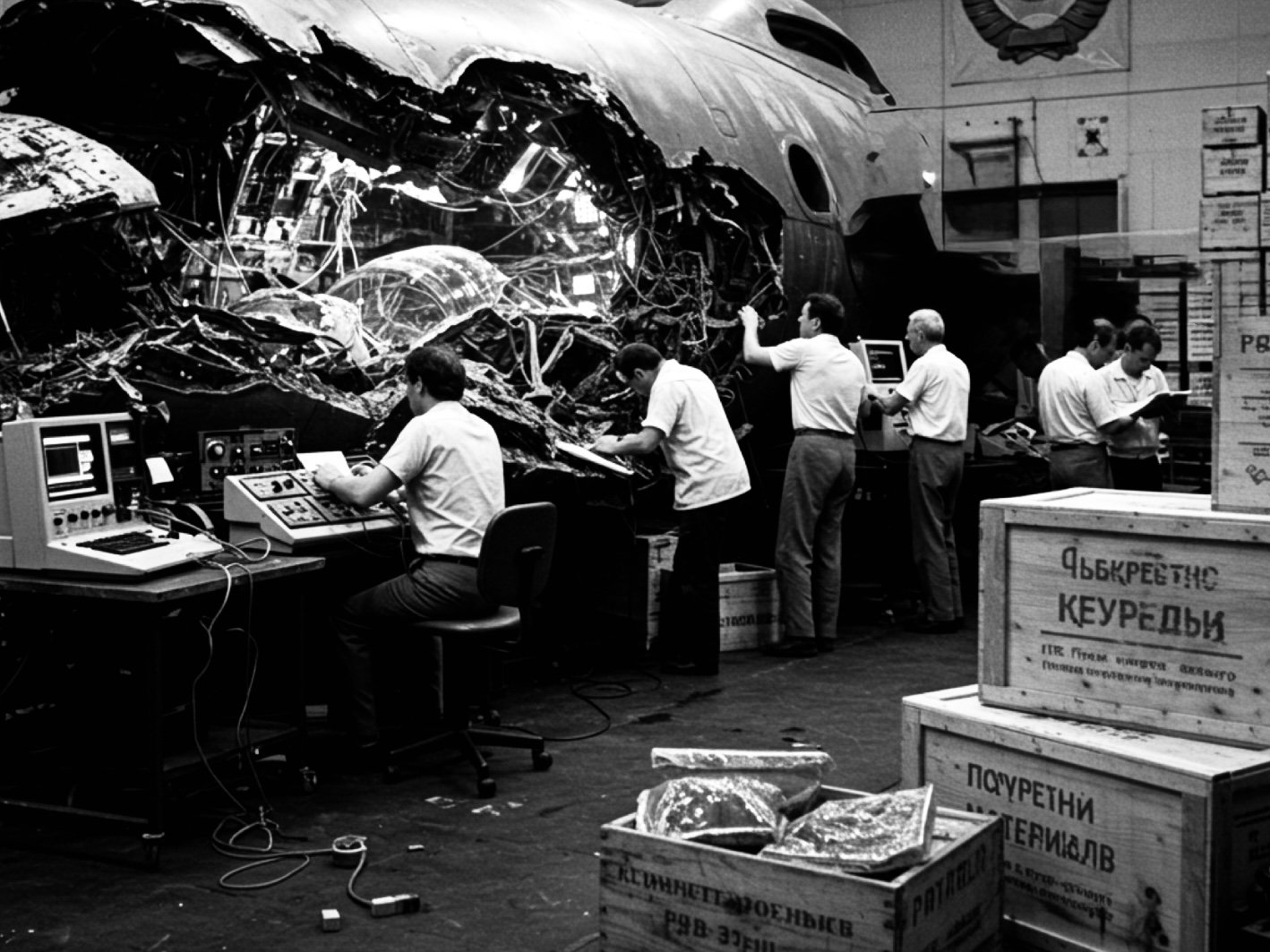
We have meticulously examined the Soviet-era designs of Valerijs Černohajev, to uncover the unique technical foundations of what, until now, held CLASSIFIED by nations.
These private notes and groundbreaking works provide a critical window into the USSR's 1980s-1990s research, establishing the direct lineage of later U.S. technological developments still being worked-on today and reveals the profound historical significance Soviet-era aerospace engineering is playing in the current U.S.-Russia technology race.
The "Černohajev Fingerprint" is a highly specific, four-part aerospace architecture that seamlessly integrates a pulsed aneutronic fusion core, direct magnetohydrodynamic (MHD) power extraction, gigawatt-scale high-temperature superconducting (HTS) networks, and an active metamaterial hull. We call this a "fingerprint" because, prior to the end of the Cold War, this exact chain of interdependent technologies existed nowhere in the public or military record as a unified vehicle design.
It was a sequence forged by a single engineer pushing known physics to its absolute limits to explain an impossible observational profile. It wasn’t until the late 1990s and early 2000s that this precise technological footprint suddenly began materializing in Western defense channels. From early Air Force Research Laboratory (AFRL) hardware tests on MHD energy bypass, to Defense Intelligence Agency (DIA) surveys, to the billions of dollars currently pouring into private aneutronic fusion and aerospace superconductors, the U.S. defense apparatus fractured this blueprint into highly specialized silos. The modern aerospace industry has spent the last thirty years—and billions of dollars—attempting to build the exact thermodynamic and material components this Soviet engineer mathematically deduced were required for advanced electromagnetic flight
WHY IT MATTERS
The Černohajev Archive threatens to fundamentally disrupt and bypass the U.S. government's "controlled disclosure" model. Widespread academic and public validation, destroys the Pentagon's managed timeline in three specific ways:
1. It Replaces Secrecy with Open-Source Science
The entire premise of "controlled disclosure" relies on the government retaining the physical materials and locking them inside new Special Access Programs (SAPs). The Černohajev archive bypasses the gatekeepers entirely by being open-source and publicly accessible.
The Disruption: The archive outlines specific engineering metrics. If mainstream universities, independent labs, or tech startups pick up these papers and expand or validate any of the math, the technology enters the public domain. The government cannot classify or exercise eminent domain over physics derivations that citizens are already downloading and testing globally. the
2. It Shatters the U.S. "Monopoly on Truth"
The U.S. narrative is carefully crafted around a "domain awareness gap" and strategic ambiguity—admitting things exist but claiming we don't know what they are.
The Disruption: The Černohajev papers act as historic insight into the highly structured Soviet UFO reverse-engineering program that ran parallel to classified U.S. programs. If the archive becomes mainstream, the Pentagon loses its ability to slowly introduce the topic to the public. Instead, they are forced to answer immediate, highly uncomfortable geopolitical questions about what the Soviet Union successfully weaponized or discovered during the Cold War.
3. It Forces an Uncontrolled "Tech Race"
Controlled disclosure assumes the U.S. has decades to slowly drip-feed information to avoid economic or societal shock and frames the subject as an ongoing mystery we need to "study." These works demonstrates there is no mystery and is activel treated as a hardware problem that has already been analyzed.
Any confirmation that the Černohajev manuscripts contain a viable blueprint for fuel-less propulsion, it exposes the horizontal technology race thats existed for the last 40 years. The U.S. government would immediately have to disclose whether this information was already known inside the intelligence, research and development communities - and if not why, and how far ahead might Russia and China be if this was in the system 40 years ago.
The Černohajev archive represents the ultimate wild card because it turns a political ve conversation about declassification into a raw, scientific question about engineering execution.
-
![A damaged aircraft inside a hangar with a Soviet Union emblem on the wall, and several workers or scientists examining or working on it.]()
As a Bridge Between Science and Secrecy
Produced during the final decades of the Cold War, meant for Soviet defense eyes only — now a tangible piece of hidden history for the curious and the collectors.
It’s dense. It’s mathematical. It reads more like a lab notebook than a book. But that’s the point. It’s a direct window into how one engineer, working decades ahead of his time, was reverse-engineering the impossible.
You don’t have to solve the equations to appreciate what’s here. Many people enjoy Engineering Infinity because of what it represents - a real artifact from a hidden chapter of Ufology; a technical reference that connects directly to patents, declassified programs, and modern propulsion research; and a conversation piece. The kind of thing you can pull off a shelf when someone asks, “Did anyone really work on this stuff?”
-
![A technical blueprint of a hockey rink, including a diagram with measurements and labels in Russian, showing the layout and structures of the rink.]()
As a Reference Source
“It’s not meant to be an easy read—it’s meant to be a key. Like the Rosetta Stone, it’s unreadable to most, until you realize what it’s unlocking.”
Engineering Infinity is a recovered Cold War engineering dossier- the kind of material that normally disappears into government archives. Černohajev’s equations describe structured-vacuum propulsion, gravito-magnetic field control, and resonant energy transfer decades before comparable Western programs even admitted the questions existed.
This is not a narrative book; it is a technical key. Every page is authentic Soviet notation, formula, and schematic - dense, unfiltered, and begging to be reverse-modeled. Researchers in plasma physics, propulsion, and materials science will recognize the fingerprints of genuine experiment.
Use it as a reference, not a read. It’s intended to sit beside your textbooks, not on your coffee table.
-
![Two large satellite dishes on towers against a gray sky, with a low brick building and some trees below.]()
As a Cold-War Artifact
“Translated from a collection of Soviet-era engineering papers discovered after the collapse of the USSR, Engineering Infinity is the kind of document intelligence services classified for decades—because it bridges the gap between the impossible and the inevitable.”
Every modern UAP report, propulsion patent, and declassified experiment echoes ideas that appeared first in these pages. Engineering Infinity provides the technical backbone behind seventy years of “unexplained” phenomena.
Inside are blueprints, translated annotations, and Soviet-era research logs that connect Cold War black-projects to today’s defense-industrial complex. Investigators, journalists, and intelligence historians use it to track the lineage of technologies once dismissed as impossible.
It doesn’t read easily—because it was never written for public eyes. It was written for engineers building a future no one was allowed to acknowledge.
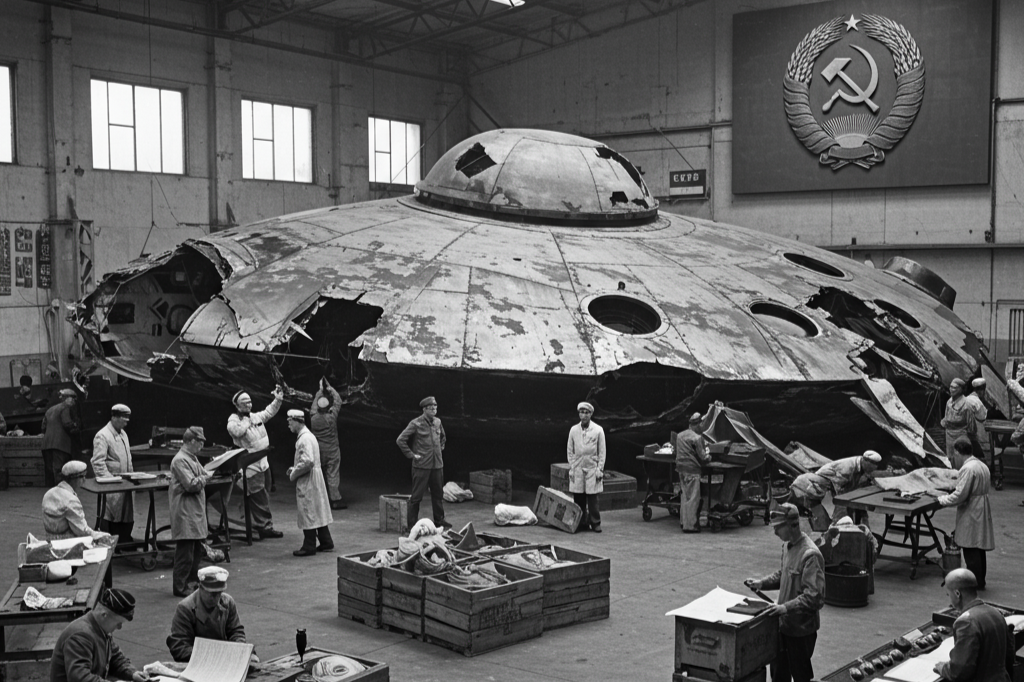



The Ghost in the Machine
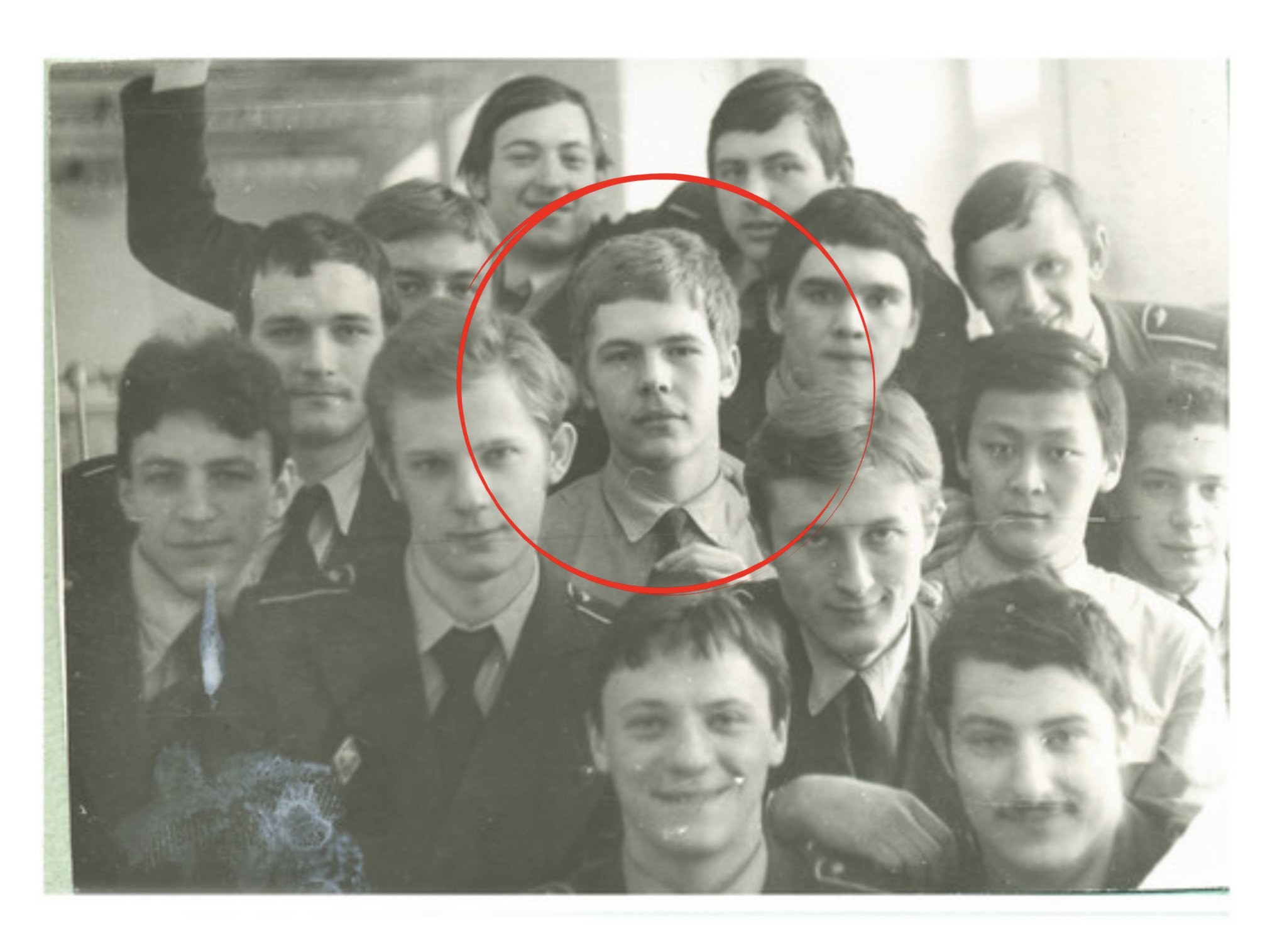
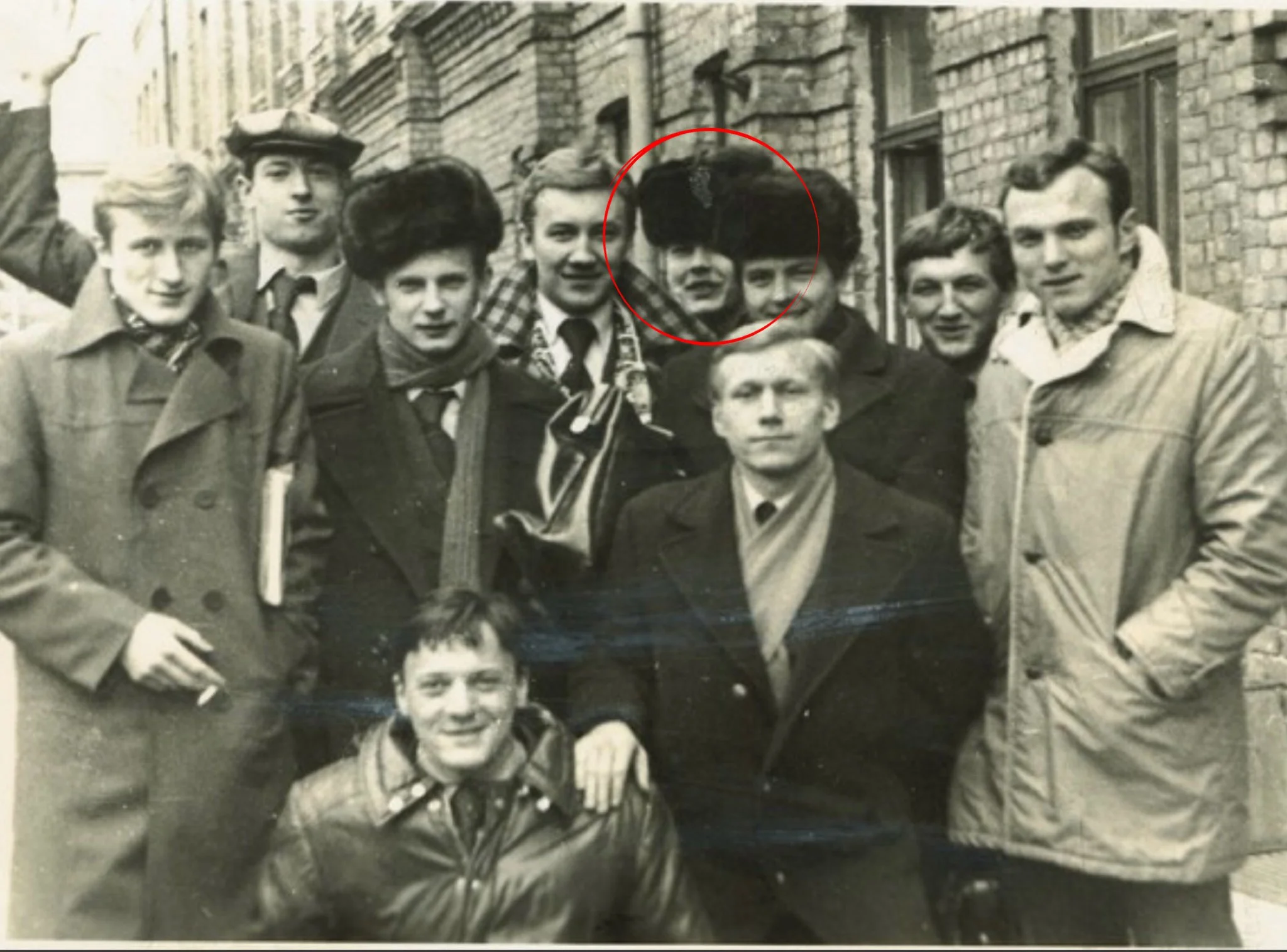
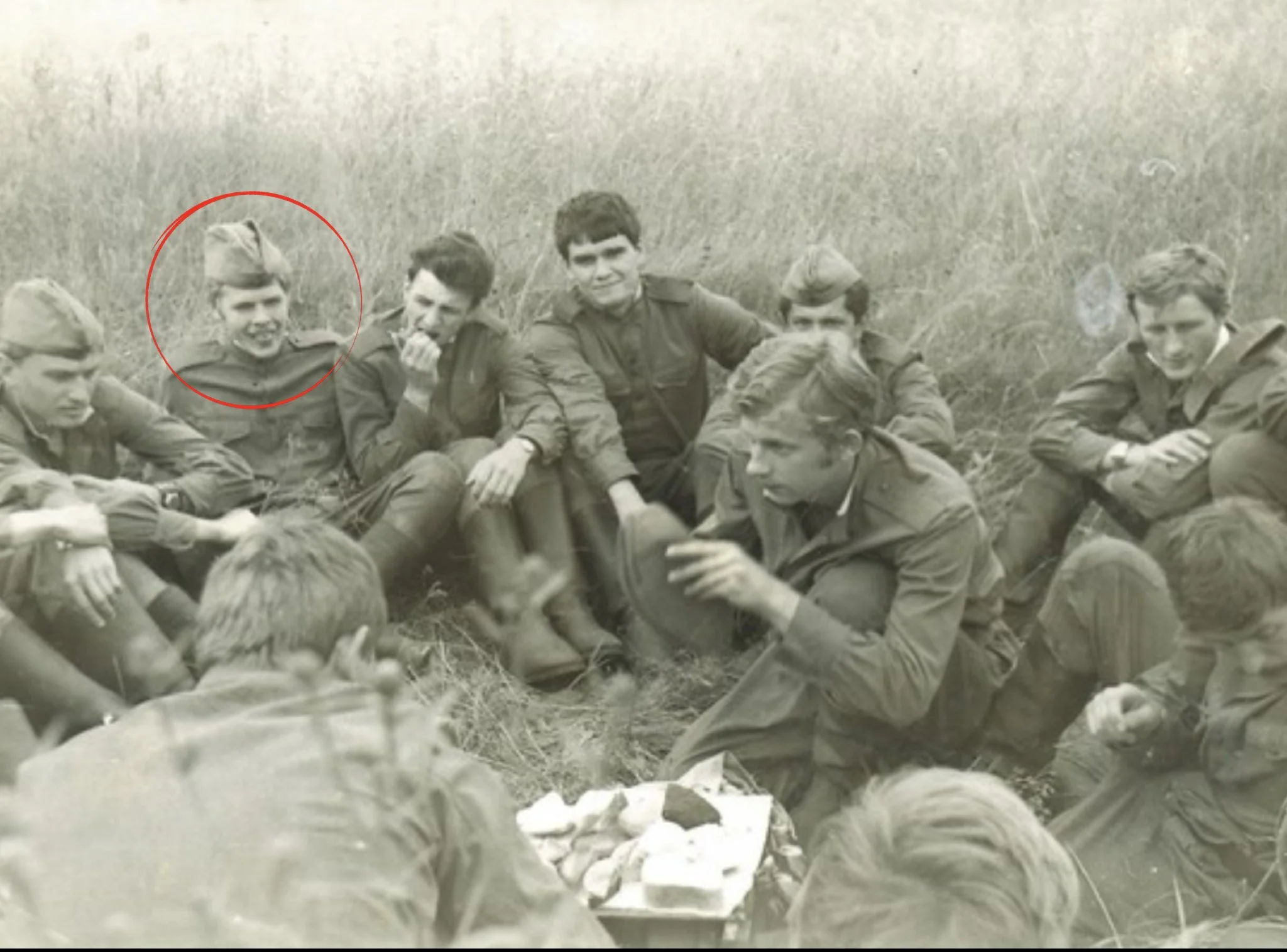
This is not a book about beliefs. Valerijs Černohajev produced these 12 technical works between 1980 and 2007 containing engineering specifications for advanced propulsion systems. These documents predate, by decades, US government disclosures about UAP programs and patents covering similar technologies. Engineering Infinity: Earth’s First Interstellar Blueprint provides the translation, analysis, and context needed to evaluate them. But what do we know about the man?